The Consult Panel
Some questions don't have one expert. Three specialists answer in parallel; the Chief of Staff says where they agree, where they differ, and what it recommends.
When the Chief of Staff recommends a panel
When pricing, evidence and regulatory timing pull in different directions, the routing card ranks Consult Panel · 3 first, with a reason such as one expert would answer one of them. Each member row carries its own why: owns the AMNOG price corridor · owns the added-benefit evidence · owns the label timing and the launch window.
Run it
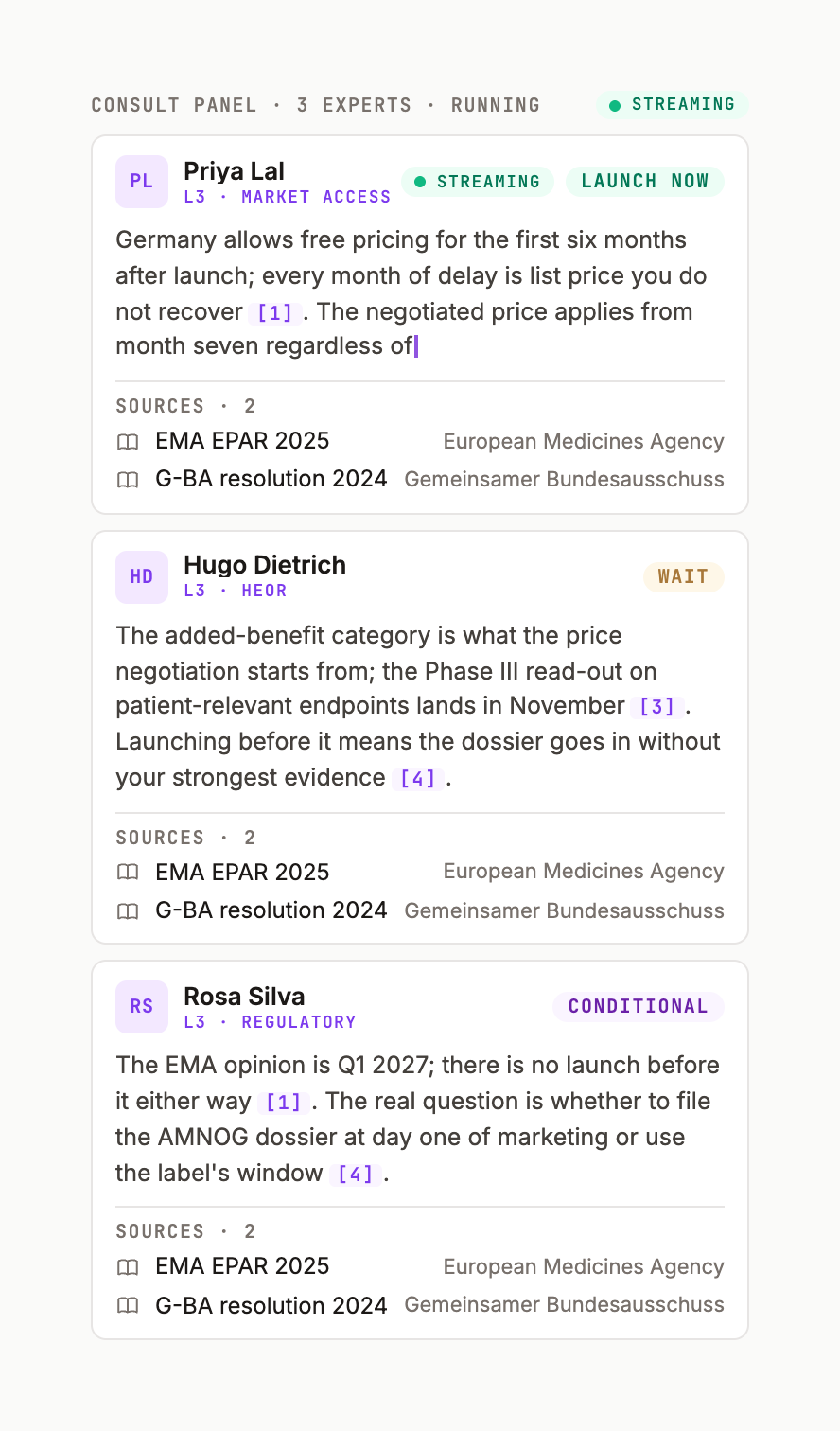
Click Run on the panel card (30–40 CREDITS). Three answer cards appear and stream at the same time. Each settles with a stance pill — for example LAUNCH NOW · WAIT · CONDITIONAL — and its own SOURCES strip. They are allowed to disagree; that is the point.
The synthesis
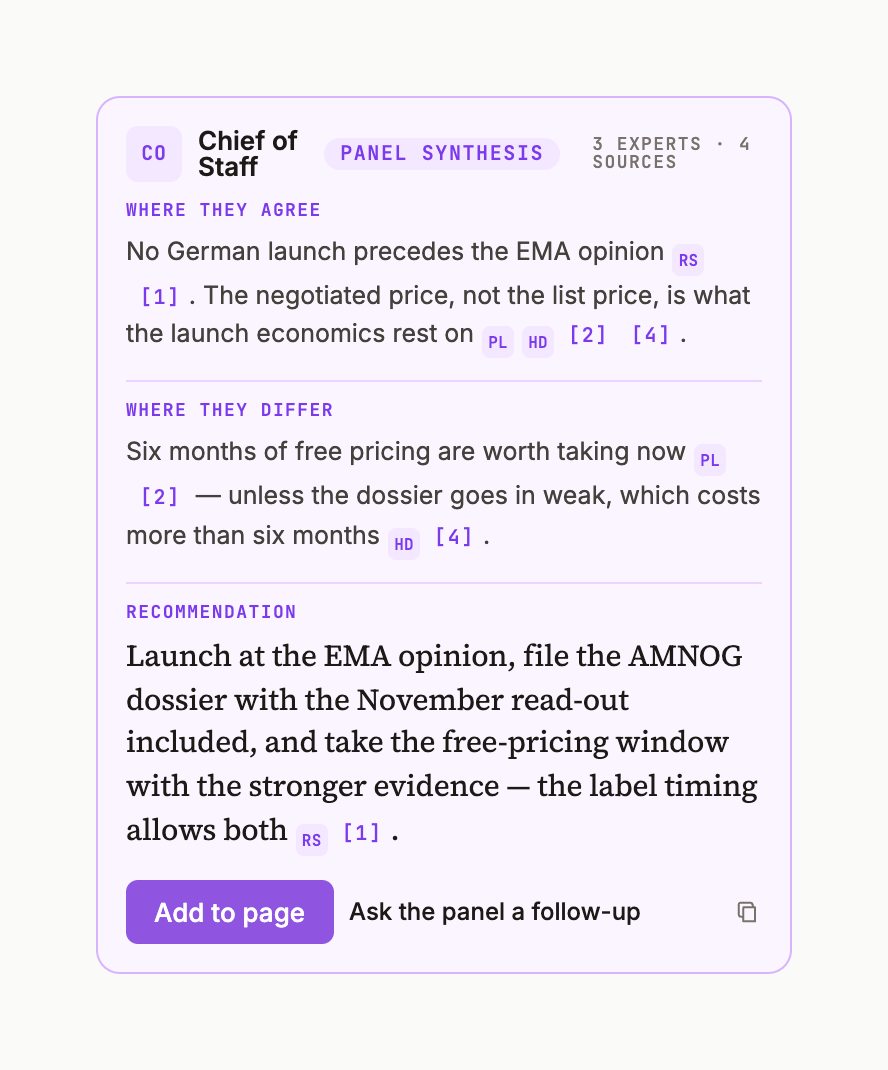
Then the Chief of Staff does what a chief of staff does. A synthesis card with three sections:
WHERE THEY AGREEWHERE THEY DIFFER— each line ends with the initials of the expert who holds the viewRECOMMENDATION
Every sentence carries an attribution chip (PL · HD · RS) before its [n], so you see who said it as well as where it came from. Hover a chip and the matching sentence lights up in that expert's card.
Onto the page
Add to page writes the synthesis as a section with the three parts as short paragraphs and all [n] chips. Verify runs on it like any other content; the Gates tab shows the version awaiting sign-off.
Ask a follow-up
Ask the panel a follow-up keeps the three specialists in the thread. A second round is priced like the first.